
 by Evan
Ask anyone who lives here and you will hear a version of the same advice: the visitors who enjoy Cape Town most are the ones who do not over-plan it. This is a city where the wind can close the cable car on the one clear afternoon you set aside for Table Mountain, and where the best meal of the trip is usually the one nobody booked. A good Cape Town holiday needs a little structure and a lot of room to change its mind. This guide covers the practical side of striking that balance: when to come, where to base yourself, what things genuinely cost, and the local details that rarely make it into a brochure.
Where to Stay and How to Pay Less for It
Accommodation is the largest line in most Cape Town holiday budgets, which makes it the easiest place to save with so many different options available.

Finding Cape Town Hotels Specials
The best Cape Town hotels specials are rarely on the first page you land on, and a few small habits when researching places to stay make a real difference:
- Compare websites: Find the hotel on a comparison site such as booking.com, then check its own website, because direct rates are often lower and the perks better.
- Different devices: Compare the app, the desktop site and an incognito window, since prices can genuinely differ between them.
- Currency and mailing lists: Set the currency to rand rather than your own, and join the mailing list, because specials land there first.
- Refundable options: Book a refundable rate, then check a fortnight out again and rebook if it has dropped.
None of this takes long, and it will often save you quite a bit of money.
How to Find the Best Holiday Villas in Cape Town
Airbnb and Booking.com both carry plenty of inventory, so filter by neighbourhood before price, because a bargain in the wrong suburb can cost you the saving back in driving time. Check for parking, notice how steep the driveway looks, and read the reviews. For groups and larger families, a villa with a kitchen and a braai area changes the math entirely. Whichever way you go, book early for December and January.
Is Cape Town a Good Holiday Destination?
Yes, and the reason comes down to geography. There are few cities where you can spend the morning on a mountain, the afternoon in the sea and the evening on a wine farm, which is why a week here often feels like three holidays stitched together.

That said, we would rather be honest about a few things before you book:
- The strong wind: The wind is not a myth, and the south easter regularly closes the cableway at short notice, so do not pin your trip on one clear afternoon.
- Distances are deceptive: The mountain sits in the middle of everything, and you usually have to drive around it.
- Wealth is unevenly spread here: Stay aware of your surroundings and tip service staff generously wherever you can and where the service has been good.
None of this should put you off a Cape Town holiday. It explains why the trips that go well are the ones with some flexibility built in.
When to Visit and How Long to Stay
Timing affects what your trip costs more than any other decision, so decide on it before you book flights.
Choosing Your Season to Visit for Your Cape Town Holiday
Every season here has its own character, and none is a bad choice:
- December to February: Peak summer, bringing the best beach weather along with the busiest restaurants and the highest prices of the year.
- March and April: Many of us quietly consider this the sweet spot, because it stays warm and the wind settles somewhat.
- May to August: These months bring real rain, but also green mountains and the lowest rates you will find. Southern right whales arrive around June and are best watched from Hermanus two hours down the coast.
- September to November: This give you wildflowers and peak whale season through October, though the weather changes its mind several times a day.
Our guide to the best time to travel to Cape Town breaks each season down properly.
How Many Days You Need
Seven days is a sensible minimum, and ten to fourteen is better if you are flying long-haul. Whatever you settle on, do not save the iconic Table Mountain for your final afternoon. As well as closing in high wind, the cableway shuts once a year for maintenance, and in 2026 that meant closing on 27 July and reopening on 10 August.

Getting Your Bearings: A Tourist Map of Cape Town
Before you look at a tourist map of Cape Town, it is important to understand the layout of the city. It is a set of quite different neighbourhoods arranged around the mountain, and the side you stay on shapes your whole trip.

Here is how the main areas break down:
- The City Bowl and CBD hold the museums, the nightlife and the Bo-Kaap and are the most walkable parts of the city.
- The Atlantic Seaboard covers Camps Bay, Clifton and Sea Point, with the famous beaches and sunsets at some of the highest prices in town.
- The Southern Suburbs takes in Newlands, Claremont and Constantia, which are leafy and residential with forests and wine farms close by.
- False Bay runs through Muizenberg, Kalk Bay and Simon’s Town, where the water is warmer and the penguins live.
- The Winelands around Stellenbosch and Franschhoek sit an hour inland, and although they definitely deserve an overnight rather than a rushed day trip, it is doable to see a few things in a day.
Do You Need a Cape Town South Africa Tour Package?
A Cape Town South Africa tour package is not necessary but can be worth it in certain situations. It makes sense if this is your first long-haul trip, if driving on the left fills you with dread, or if you are adding a safari leg where the logistics get complicated.
Before committing to any Cape Town package, look closely at what has been left out. Cape Town South Africa packages frequently exclude things such as Table Mountain tickets, park fees, tips and most meals, which can close the gap with booking independently. Most visitors end up in the middle, booking their own accommodation and car for the Cape Town holiday itself, then buying a day tour for the winelands so nobody has to drive home.
Cheap Holidays in Cape Town: The Free and Donation-Based List
People often say the best things about cheap holidays Cape Town has to offer are the ones that cost nothing, and in this case the cliché is true.
We would start with these:
- Wlaking Tours: The free walking tours are the best value in the city. Walking Tours Cape Town runs tips-based tours from Morning Mojo Cafe & Deli in Wale Street, with no booking needed, and since guides work for tips, please carry cash.
- Hiking: Hiking is free, including Lion’s Head, Signal Hill, Newlands Forest, Cecilia Forest and the Pipe Track.
- The Promenade: The Sea Point Promenade gives you eleven kilometres of beautiful coastline, tidal pools and an outdoor gym without anyone asking for a cent.
- First Thursdays: First Thursdays keeps the city galleries open late on the first Thursday of every month.
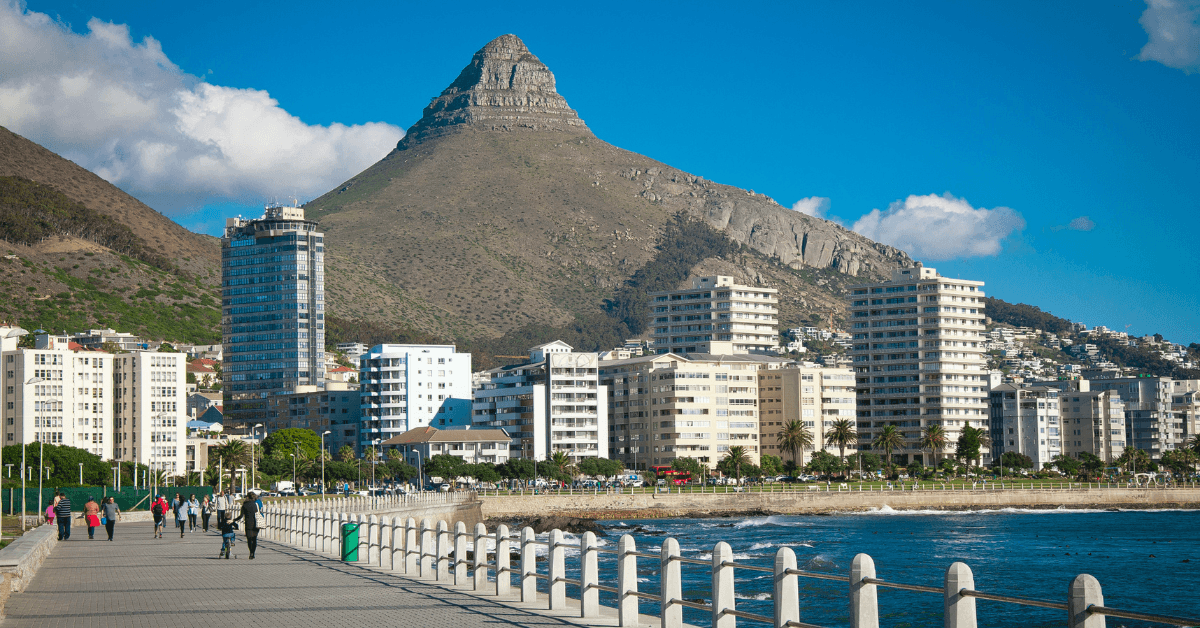
Between our guides to Cape Town’s beaches, Newlands Forest and hikes with waterfalls, you could fill several days for your Cape Town holiday without touching your budget.
Planning Great Family Holidays to Cape Town
Family holidays to Cape Town work best from the Southern Suburbs or Simon’s Town, because the drives are shorter and the water in False Bay is far warmer than anything on the Atlantic side. Between the penguins at Boulders, a morning at Kirstenbosch and a surf lesson at Muizenberg, you will keep most children happy for a week. Our guide to family activities in Cape Town has more ideas, and we have written separately about why we hold our own among the family restaurants in Cape Town.

What to Eat and Drink
Cape Town’s food scene draws on several distinct traditions, and it’s worth knowing where to find each one. Cape Malay cooking, rich with spice and slow-cooked flavour, is centred in the Bo-Kaap, where family-run kitchens serve dishes like bobotie and denningvleis. For fresh seafood, head to the harbour towns along the coast, particularly Kalk Bay and Hout Bay, where the catch comes straight off the boats. Braai culture is everywhere, from backyard gatherings to township spots, and is as much a social ritual as a meal. The Cape Winelands, just outside the city in Stellenbosch, Franschhoek, and Constantia, pair award-winning wine with farm-to-table dining. And for something more casual, the Gatsby, a footlong sandwich piled with chips and filling, originated in the Cape Flats and remains a local institution.
Cape Town Customs & Manners
Here are some things to keep in mind during your time in the Mother City:
- Tipping: Tipping is expected rather than optional: 10 to 20 percent in restaurants, and R10 to R20 for car guards and petrol attendants.
- Payment methods: Cash is preferred, since many service workers cannot accept card tips, though QR-code payment apps like Zapper and Snapscan are increasingly common.
- Greet people properly before getting to the point of what you want to say.
- Traffic lights: When someone tells you to turn left at the robot, they mean the traffic light.
Practical Safety
Cape Town’s crime statistics are high, but the risk is mitigated by being aware of your surroundings and following a few simple habits.
- Hike in a group: There are many hiking groups to be found on Facebook.
- Hide your valuables: Never leave anything visible in a parked car, and don’t leave valuables in the car at all; rather, leave them at your accommodation.
- Do not walk: Take an Uber or Bolt after dark, or in areas that aren’t safe during the day.
Following these rules will leave you safe and able to enjoy everything the city has to offer.
Your Cape Town Holiday Pre-Departure Checklist
Run through this before you fly, because all of it is easier to sort out at home:
- Check your passport is valid for at least 30 days beyond your return date and has two blank visa pages.
- Confirm your visa requirement, as many nationalities are granted up to 90 days visa-free on arrival.
- Submit the SARS online traveller declaration, required of everyone entering or leaving since 1 July 2026, and best done within 24 hours of travelling.
- Buy Table Mountain tickets through Webtickets, the only channel the Cableway recognises.
- Pack a universal adapter, because South Africa’s three-prong plug is unlike almost anything else.
Making Room for the Unplanned
If we could offer one last piece of advice, it is that the best Cape Town holidays are the ones with slack in them. Leave a buffer day for the weather, resist booking three things before lunch, and let one afternoon run on longer than planned. That is usually the afternoon people speak about when they come back.
Visit Forries on Your Next Cape Town Holiday
Cape Town has much to offer holidaymakers, and there really is something for everyone. It is well worth planning in enough time to make the most of it.

No matter what your plans are, you will find Forries open from 11:30 on weekdays and from 09:00 on weekends, with breakfast on Saturdays and Sundays until 11:30. There is a beer garden shaded in summer and heated in winter, there is wood-fired pizza amongst many other delicious meals, and there is a table at 52 Newlands Avenue with your name on it. Read more about our beer garden, our weekend breakfast and our pub lunch, or browse our blog for more information on Cape Town.

Frequently Asked Questions
1. How much does the Table Mountain Cableway cost?
A return adult ticket booked online costs R475, or R530 at the ticket office. Children aged four to seventeen pay R230 online and R270 at the office, and under-fours travel free. These rates run to 30 June 2027.
2. Is Cape Town safe for tourists?
Broadly yes, with sensible precautions. Stick to popular areas and trails, hike in groups, never leave valuables visible in a car, and use ride-hailing apps after dark.
3. Do I need a car in Cape Town?
For most itineraries, yes. Public transport does not reach the peninsula, the winelands or the trailheads. Uber and Bolt are cheap within the city, so some visitors hire a car only for day trips.
4. What is the cheapest time to visit Cape Town?
Winter, from May to August, brings the lowest accommodation rates alongside green mountains and whale season. If you would rather not gamble on rain, March and April offer the best compromise between price and weather for a Cape Town holiday.
